

Introduction: The Silent Threat Inside Buildings
In today’s modern world, we often focus on the quality of the air we breathe outdoors, overlooking the fact that indoor air quality (IAQ) can be just as harmful. In schools, hospitals, and offices, poor IAQ can silently affect the health, well-being, and productivity of the people inside. The Air Quality Index (AQI) is a critical tool for understanding these invisible threats. With growing concerns about respiratory conditions, allergies, and cognitive decline, understanding AQI for indoor spaces is no longer just an option—it’s a necessity.

For indoor environments, AQI is influenced by several key factors:
Particulate Matter (PM 2.5 and PM 10)
Volatile Organic Compounds (VOCs)
Carbon Dioxide (CO₂)
Humidity
SmartEco approach to AQI monitoring provides actionable insights tailored to these specific pollutants, helping to ensure that indoor air quality remains at optimal levels.
Key Pollutants and Their Impact: A Deeper Dive:-
Particulate Matter (PM 2.5 and PM 10):
Particles smaller than 10 microns can easily be inhaled into the lungs, where they can cause chronic health problems. PM 2.5 is particularly dangerous because it can enter the bloodstream and affect vital organs.
In Schools: Children’s developing respiratory systems are highly sensitive to particulate pollution. Prolonged exposure can contribute to asthma and other long-term respiratory issues.
In Hospitals: In hospital settings, patients with compromised immune systems or respiratory conditions are vulnerable. PM pollution can increase hospital-acquired infections, complicating recovery.
In Offices: Employees exposed to particulate pollution may experience chronic fatigue, decreased cognitive function, and increased absenteeism due to illness.
Volatile Organic Compounds (VOCs):
VOCs are gases emitted from everyday materials like paints, cleaning products, and furniture. These compounds can cause immediate symptoms like headaches and dizziness, and long-term exposure can lead to more serious conditions like cancer.
In Schools: Inadequate ventilation can cause VOCs to accumulate in classrooms, leading to discomfort and negatively affecting students’ ability to concentrate.
In Hospitals: VOCs interfere with the sterile environment required for patient care and can worsen pre-existing conditions in sensitive patients.
In Hospitals: VOCs interfere with the sterile environment required for patient care and can worsen pre-existing conditions in sensitive patients.
Carbon Dioxide (CO₂):
CO₂ is a natural byproduct of human respiration, but in enclosed spaces, high CO₂ concentrations indicate poor ventilation and can impair cognitive function.
In Schools: High CO₂ levels in classrooms can lead to tiredness, poor concentration, and decreased academic performance, affecting students’ learning experiences.
In Hospitals: Poor ventilation in critical care areas can lead to a lack of oxygen, hindering recovery and negatively impacting patient outcomes.
In Offices: Elevated CO₂ levels in offices lead to fatigue, reduced cognitive function, and decreased employee productivity, creating a less effective workspace.
Humidity Levels:
Imbalanced humidity levels can foster mold growth or lead to dryness in the respiratory system, affecting both comfort and health.
In Schools: Excessive humidity can cause mold growth in classrooms, leading to respiratory issues and allergies in students. Conversely, too little humidity can lead to dry skin and sore throats.
In Hospitals: Humidity control is critical in healthcare environments to prevent mold and bacteria growth that could affect patient health and contaminate medical equipment.
In Offices: In offices, poor humidity control can lead to discomfort, including dry eyes, nasal irritation, and increased susceptibility to respiratory infections, impacting overall employee productivity.
How SmartEco Revolutionizes AQI Monitoring for Schools, Hospitals, and Offices

SmartEco AQI solution is designed not just to measure air quality but to empower users to take action. Here’s how our product transforms air management:
Comprehensive Pollutant Detection
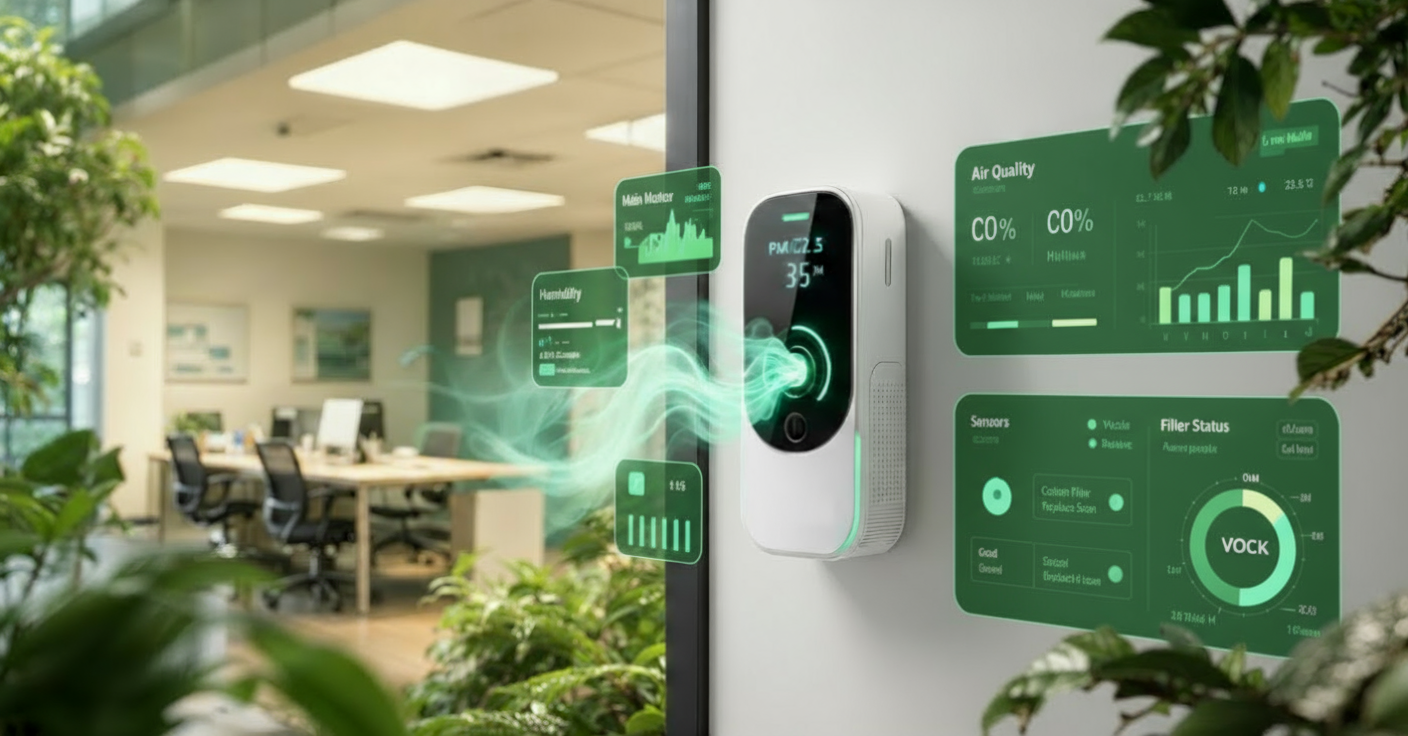
SmartEco monitors particulate matter (PM 2.5 & PM 10), VOCs, CO₂, and humidity, offering a 360-degree view of your indoor air quality. With real-time data, it ensures that you stay ahead of potential air quality issues before they affect health or productivity.
Real-Time Alerts for Actionable Decision-Making
By providing instant notifications when AQI levels exceed safe thresholds, SmartEco enables you to take immediate action—whether it’s improving ventilation, adjusting HVAC settings, or activating air purifiers. These proactive steps help maintain a healthy and comfortable environment at all times.
Data-Driven Insights
SmartEco user-friendly dashboards offer actionable insights, allowing you to analyze air quality trends over time. This helps in planning maintenance, optimizing HVAC systems, and improving overall air management strategies, tailored specifically for schools, hospitals, and offices.
Energy Efficiency Meets Comfort
SmartEco integration with HVAC systems ensures that energy is used efficiently. By maintaining optimal air quality without over-using energy resources, reduces operational costs while ensuring maximum comfort.
Why Indoor AQI Matters: Benefits for Schools, Hospitals, and Offices
Healthier Learning Environments:
Clean air in schools directly impacts students’ cognitive abilities, concentration, and overall well-being, reducing absenteeism due to respiratory issues and improving academic performance.
Enhanced Patient Care in Hospitals:
Hospitals with optimal air quality can significantly improve patient recovery times, reduce infections, and ensure that healthcare workers remain focused and healthy.
Increased Workplace Productivity:
Offices with controlled AQI experience better employee focus, higher morale, and reduced sick days, all of which contribute to enhanced overall productivity and job satisfaction.
About
The SmartEco Advantage: Tailored Solutions for Every Sector
SmartEco is not just a product; it’s a commitment to creating healthier indoor spaces. Whether you are managing the air quality in a school, hospital, or office, SmartEco’s advanced monitoring system ensures that your indoor air quality is always at its best. From reducing the risk of respiratory diseases in schools to optimizing patient recovery in hospitals and boosting employee productivity in offices, SmartEco’s impact is profound.
Conclusion
Take Control of Your Indoor Air Quality Today
Indoor air quality directly impacts health, productivity, and the overall experience of occupants in any building. With SmartEco, understanding and controlling AQI is easy, actionable, and tailored to your specific needs. From real-time monitoring to energy optimization, SmartEco provides the tools you need to create a healthier, more productive environment for everyone. Recognize the signs of poor IAQ early, and act fast to make a significant difference in your indoor spaces.