
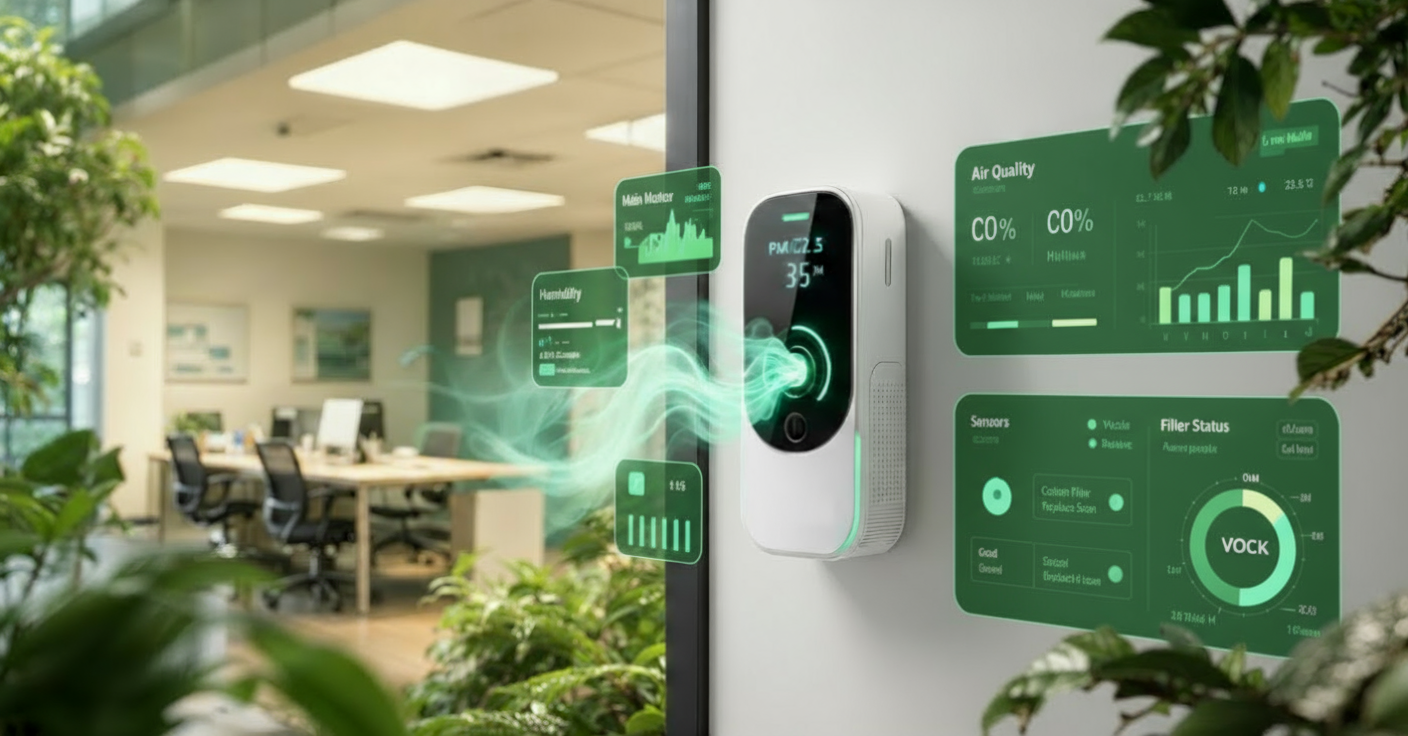

Why Light And Pressure Matter In Indoor Air Quality: When most people think about indoor air quality (IAQ), they focus on CO₂ levels, particulate matter, and humidity. However, there are two often-overlooked factors—light and air pressure—that play crucial roles in the air we breathe and how we feel within indoor spaces. The right light and pressure settings can enhance comfort, cognitive function, and overall building performance, while improper management can contribute to fatigue, discomfort, and even health issues. SmartEco IAQ devices monitor these parameters, ensuring that schools, hospitals, and offices can enjoy optimal air quality and environmental conditions

Part 1: Light—A Key Player In Health, Comfort, And Productivity
Light isn’t just for visibility—it plays a significant role in regulating our circadian rhythm, influencing sleep patterns, mood, and cognitive performance. Poor lighting can lead to fatigue, decreased focus, and even disrupt our sleep cycles. In educational environments, proper lighting is essential for student engagement, while in offices and hospitals, it impacts both productivity and recovery.
Impact on IAQ:
Cognition & Ventilation:
Studies show that well-ventilated spaces with appropriate lighting levels boost cognitive performance. If the air quality is poor (high CO₂ levels) in a dimly lit room, people tend to feel sluggish. SmartEco can detect rising CO₂ levels and adjust ventilation and lighting settings accordingly to improve alertness.
Circadian Rhythms:
Proper lighting in the morning helps synchronize our internal clocks, making us more alert during the day. For schools and hospitals, optimizing natural light exposure can improve performance and recovery.
SmartEco in Practice:
SmartEco devices track light intensity alongside other IAQ parameters, allowing real-time data analysis. When CO₂ levels rise in a classroom or office, our system can trigger automatic actions like adjusting light levels or increasing ventilation to ensure optimal indoor environments.
Part 2: Air Pressure—The Invisible Force That Drives Airflow
Air pressure differentials—often measured in inches of water column—play a vital role in the movement of air within a building. When air pressure is managed incorrectly, it can lead to issues such as poor airflow, contamination, and even discomfort. Maintaining proper pressure is especially critical in hospitals, where positive and negative pressurization is used to control the spread of infections.
Impact on IAQ:
Hospitals:
Positive pressure is used in areas like operating rooms (ORs) and protective environments to keep contaminants from entering, while negative pressure is essential for isolation rooms to contain airborne pathogens. SmartEco’s IAQ devices help monitor these pressure levels continuously, ensuring compliance with healthcare standards.
Offices and Schools:
In office buildings and schools, maintaining proper pressure ensures that air flows from clean zones to dirtier ones, preventing contaminants from infiltrating high-occupancy areas.
SmartEco in Practice:
SmartEco tracks barometric pressure and room pressure, allowing users to monitor and adjust airflow throughout the building. Whether it’s to prevent contaminated air from entering sensitive rooms or ensuring overall comfort, our system ensures that building pressure remains within optimal ranges.
The Connection Between Light, Air Pressure, And IAQ Complaints
By tracking and correlating light, air pressure, and traditional IAQ parameters (CO₂, PM, VOCs), SmartEco makes it easier to identify and resolve common IAQ issues.
The Drowsy Classroom:
If CO₂ levels spike in a poorly lit classroom, students often report feeling tired and unfocused. SmartEco’s system can recognize this pattern and adjust both the lighting and ventilation to keep students alert and engaged.
The Smelly Lobby:
In office buildings, negative pressure during windy days can pull air from the parking garage into the lobby, creating unpleasant odors. SmartEco can detect this air pressure imbalance and trigger a corrective action, restoring optimal pressure levels and eliminating the issue.
The Hospital Isolation Room:
In healthcare settings, isolation rooms must maintain negative pressure to prevent contamination. SmartEco ensures that pressure levels remain stable, even during maintenance or filter changes, and generates alerts if adjustments are needed.
Why SmartEco Is The Ideal Solution For IAQ Monitoring
SmartEco air quality monitoring devices go beyond just measuring the basics like CO₂ and particulate matter. Our advanced sensors also monitor light levels and air pressure—providing a comprehensive approach to maintaining healthy and comfortable indoor environments.

Key Features:
Real-Time Data Analysis:
Continuous monitoring of light, air pressure, and other IAQ parameters enables proactive decision-making.
Automation:
SmartEco devices can trigger automated actions like adjusting ventilation or lighting to keep indoor environments within optimal conditions.
Seamless Integration:
Our devices are designed to integrate with Building Management Systems (BMS) for easy automation and control.
Sector-Specific Benefits
For Schools:
Lighting and CO₂ Control: Proper lighting and ventilation settings ensure students stay alert, engaged, and focused, while minimizing the risk of drowsiness caused by rising CO₂ levels.
Dynamic Scheduling: SmartEco allows you to automate lighting and ventilation based on school schedules, ensuring efficient use of energy without sacrificing indoor air quality.
For Hospitals:
Infection Control: Constant monitoring of air pressure ensures that sensitive areas like operating rooms and isolation rooms maintain the required positive or negative pressure.
Enhanced Recovery: Proper lighting helps regulate circadian rhythms, supporting better recovery for patients in hospitals.
For Offices:
Increased Productivity: Proper lighting and air quality help improve employee focus and performance.
Cost Efficiency: SmartEco optimizes ventilation and lighting settings to ensure energy efficiency, reducing unnecessary energy use while maintaining a healthy indoor environment.
Conclusion:
Light and air pressure are critical elements that directly influence indoor air quality and human well-being. By monitoring these factors alongside traditional IAQ parameters like CO₂ and particulate matter, SmartEco provides a comprehensive solution for ensuring optimal indoor environments in schools, hospitals, and offices. Through real-time data collection and automated system adjustments, SmartEco makes it easier to maintain healthy, productive spaces, while reducing energy waste.
Let SmartEco help you create better indoor environments by taking a holistic approach to indoor air quality monitoring—empowering healthier spaces for everyone.