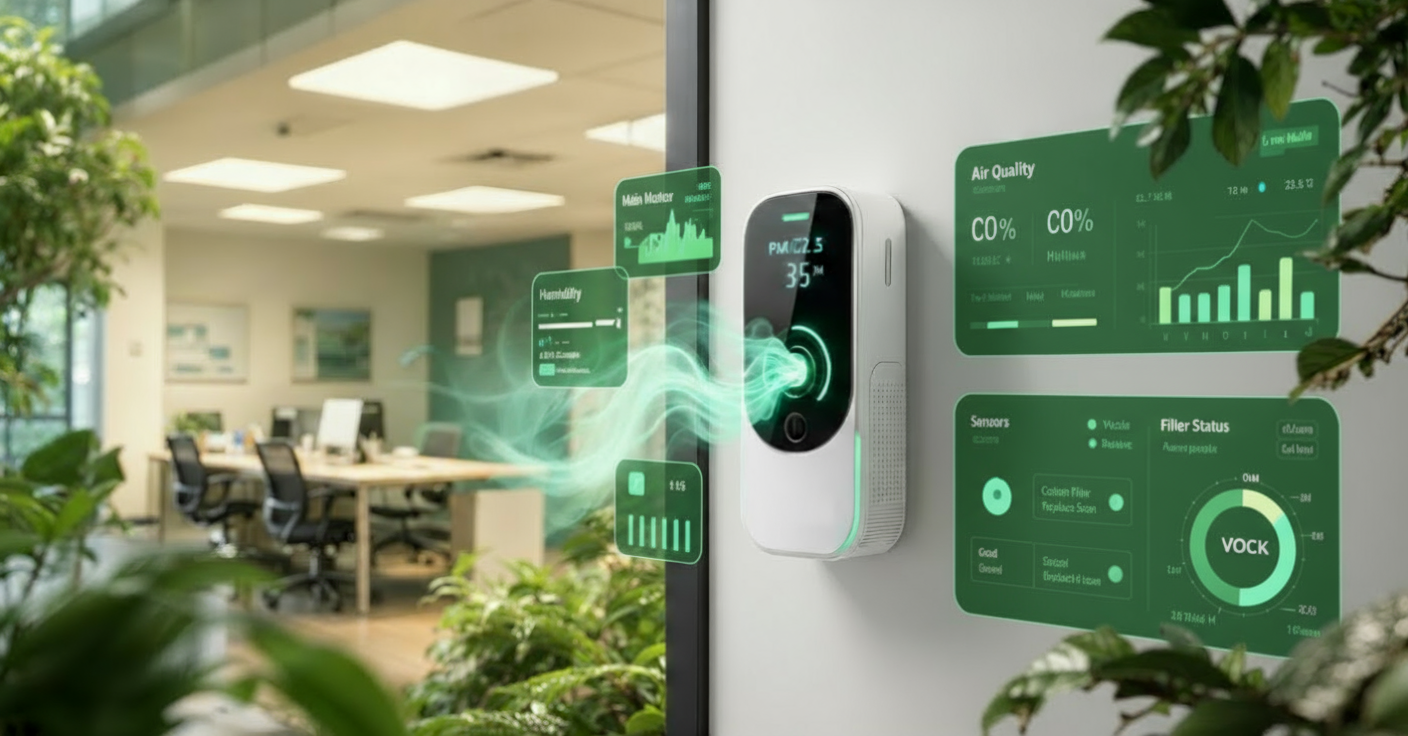


Indoor air quality in environments like schools, hospitals, and offices can often be more polluted than outdoor air due to factors like chemical pollutants from cleaning products, building materials, and high foot traffic. Poor IAQ can lead to a variety of health issues such as respiratory problems, allergies, decreased productivity, and poor sleep quality. For institutions like schools and hospitals, the impact on children, patients, and staff can be even more pronounced, making air quality monitoring crucial.
As we move towards smarter buildings, IAQ solutions must be integrated into the very fabric of these environments to ensure cleaner, healthier air for all.
Innovations Shaping the Future of IAQ in Institutions:
Real-Time Monitoring for Continuous Health
Advanced solutions like SmartEco provide real-time data on pollutants such as particulate matter (PM), CO₂, VOCs, and humidity levels. In schools and hospitals, where air quality is directly linked to the health of students and patients, having constant visibility enables immediate action. Facility managers can act proactively to address any air quality issues before they impact health and productivity.
AI-Powered Automation for Seamless Control
AI-powered IAQ monitors take the guesswork out of air quality management. These systems can automatically adjust ventilation systems or activate air purifiers based on real-time conditions, ensuring that indoor spaces remain comfortable and safe. For offices, this means minimizing employee downtime due to poor air quality, while hospitals can maintain controlled environments for patient recovery.
Seamless Integration with Existing Systems
WSmartEco’s IAQ systems seamlessly integrate with building management systems (BMS), HVAC units, and even voice assistants, allowing for easy control. This means that facility managers and staff can receive real-time updates and monitor air quality from their mobile devices. This connectivity ensures efficiency in maintaining clean air without disrupting daily operationsn.
Sustainability and Energy Efficiency for Smart Buildings
Smart IAQ solutions don’t just monitor air quality—they also optimize HVAC systems based on real-time data, improving energy efficiency. By reducing unnecessary energy consumption, organizations can lower their carbon footprint while maintaining a healthy indoor environment. This is especially beneficial for schools and hospitals where energy use is significant, and sustainability efforts are increasingly important.
Predictive Analytics for Proactive Air Quality Management
Management Future IAQ systems will predict potential air quality issues by analyzing trends and environmental factors. This proactive approach ensures that institutions don’t just react to problems, but are prepared to prevent them. For schools and hospitals, this can mean better preparedness for seasonal changes, ensuring that air quality remains optimal year-round.
SmartEco: The Future of IAQ Monitoring in Schools, Hospitals, and Offices
With innovative products like SmartEco, the future of IAQ monitoring is already here. Our solutions provide real-time data, mobile dashboards, and integration with existing building systems, ensuring that schools, hospitals, and offices are always ahead of potential air quality challenges.


The Benefits of Smart IAQ Monitoring for Schools, Hospitals, and Offices:
Healthier Spaces:
Reduce allergens and pollutants, ensuring better air for students, patients, and employees.
Improved Well-Being
Maintain ideal humidity and air quality levels to boost comfort and performance.
Sustainability
Optimize energy use while creating cleaner, greener, and more sustainable indoor environments.
Conclusion:
The future of indoor air quality is no longer just about monitoring—it’s about empowerment. By integrating intelligent IAQ solutions like SmartEco, we can create healthier, more sustainable, and more productive environments in schools, hospitals, and offices. As air quality becomes more central to building management, investing in smarter, cleaner spaces will shape the future of our communities’ health and well-being.