

The significance of indoor air quality (IAQ) has surged in recent years, driven by growing awareness of the health implications associated with indoor pollution. One of the lesser-discussed but potent components of indoor air is ozone (O₃), a reactive oxygen molecule with far-reaching effects on human health, especially when present at ground level. While ozone plays a protective role in the upper atmosphere, it can be a harmful pollutant when found in indoor spaces, particularly in sensitive environments such as schools, hospitals, and offices. In this post, we will explore the science behind ozone formation, its impact on human health, and how advanced air quality monitoring systems like SmartEco can mitigate the risks of ozone exposure in critical settings.
What Is Ozone (O₃), and How Does It Form Indoors?
Ozone (O₃) is a triatomic molecule consisting of three oxygen atoms. While ozone is most commonly associated with the stratosphere, where it shields the Earth from harmful ultraviolet (UV) radiation, ground-level ozone is a powerful oxidant and a major component of smog. Ozone at ground level is not emitted directly but rather forms through complex photochemical reactions involving nitrogen oxides (NOx) and volatile organic compounds (VOCs), typically emitted from traffic, industrial processes, or certain indoor equipment.
Indoors, ozone can be generated by a variety of sources, including photocopiers, ozone-generating air purifiers, certain types of lighting (particularly UV lights), and even common household cleaning products. The presence of ozone indoors is often overlooked, as it is colorless and has a sharp, pungent odor. However, its presence can significantly impact IAQ, especially when concentrations exceed recommended safety levels.

The Chemistry of Indoor Ozone: Formation and Transformation
Indoor ozone formation is influenced by a number of factors, including the presence of ozone precursors (NOx and VOCs), light intensity, and temperature. The primary reactions involved in ozone generation in indoor environments are:
VOC and NOx Reaction
The interaction of VOCs (released from cleaning agents, furniture, paints, and personal care products) with nitrogen oxides (NOx) from indoor air pollutants or external sources like car exhaust can create ozone. These photochemical reactions are influenced by sunlight, which is why ozone levels are often higher in areas with large windows or intense artificial lighting.
Ozone-Generating Devices
Some air purifiers and ionizers designed to improve IAQ can inadvertently produce ozone as a byproduct. Devices that use ultraviolet (UV) light or corona discharge can create ozone in high concentrations, which can then accumulate in indoor air.
Secondary Pollutants
Once ozone is introduced into the indoor environment, it can react with other pollutants (e.g., VOCs and particulate matter) to form secondary pollutants. These compounds can pose even greater health risks than ozone alone, contributing to respiratory irritation and long-term chronic conditions.
Health Implications of Ozone Exposure in Sensitive Environments
Ozone is a powerful oxidant, and when inhaled, it can cause significant damage to respiratory tissues. The health risks associated with ozone exposure vary depending on concentration, duration, and the susceptibility of the exposed individual. In sensitive environments like schools, hospitals, and offices, these risks are magnified, especially for children and critically ill patients.
Respiratory Health
Ozone can cause immediate irritation of the eyes, nose, and throat. It can also lead to symptoms such as coughing, shortness of breath, and chest tightness. For individuals with pre-existing respiratory conditions, such as asthma, chronic obstructive pulmonary disease (COPD), or lung infections, exposure to ozone can exacerbate symptoms, leading to increased hospitalization rates and reduced lung function.
Children’s Vulnerability
Children, whose lungs are still developing, are particularly susceptible to the effects of ozone exposure. Studies have shown that ozone can impair lung development, decrease lung function, and increase the likelihood of developing asthma. Schools are a critical environment where ozone levels must be controlled to safeguard the health and academic performance of students.
ICU Patients
In hospital ICUs, particularly those treating patients with respiratory distress or recovering from surgery, ozone exposure can exacerbate health complications. Ozone has been shown to reduce the effectiveness of respiratory treatments, prolong recovery times, and increase the risk of infections. For patients with weakened immune systems or those on mechanical ventilation, clean air with minimal ozone concentration is essential for healing.
Productivity in Offices
In office environments, the presence of ozone can contribute to what is commonly referred to as “sick building syndrome.” Symptoms such as headaches, fatigue, and difficulty concentrating can arise due to poor air quality, leading to decreased productivity, higher absenteeism, and lower employee morale.
Measuring and Monitoring Ozone Levels with SmartEco
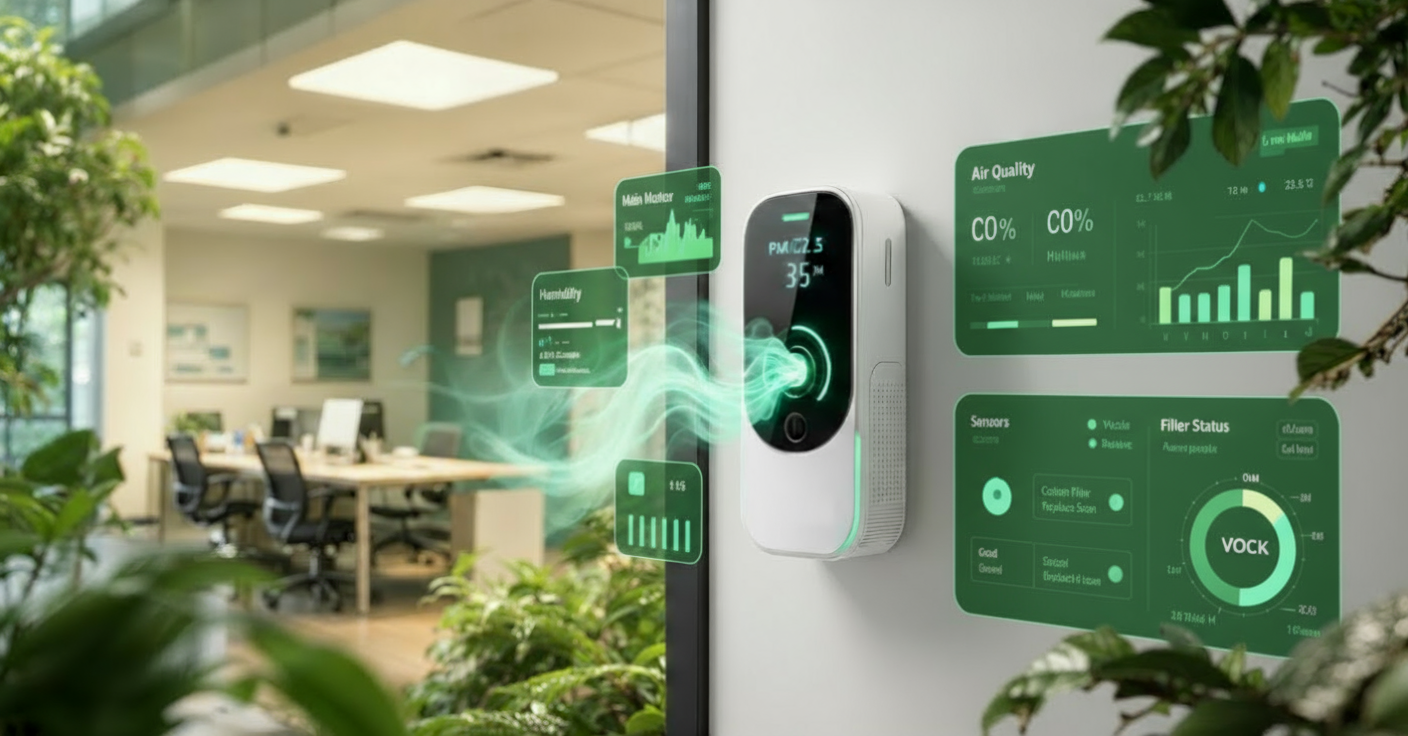
Effective management of indoor air quality (IAQ) relies on continuous monitoring of pollutants like ozone. SmartEco’s advanced air quality monitoring system provides real-time data on ozone levels, VOCs, particulate matter, and other key IAQ parameters, allowing building managers and health professionals to make informed decisions about air quality.

Key Features of SmartEco’s Ozone Monitoring System:
Real-Time Ozone Detection
SmartEco continuously monitors ozone concentrations in real-time, alerting you when levels exceed the safe threshold, typically set by regulatory bodies like the EPA (Environmental Protection Agency). This enables immediate corrective actions to mitigate exposure risks.
Data Logging and Analysis
The system stores historical data, which can be analyzed to track ozone levels over time. This is particularly useful for identifying trends and understanding how ozone levels fluctuate based on environmental factors such as temperature, lighting, and activity.
Integration with HVAC Systems
SmartEco can be integrated with HVAC systems to adjust ventilation based on real-time ozone readings, optimizing air exchange rates to reduce pollutant concentrations.
Comprehensive Air Quality Management
Beyond ozone, SmartEco monitors a range of other pollutants (e.g., CO2, particulate matter, and VOCs), providing a holistic approach to IAQ management. This makes it an invaluable tool in schools, hospitals, and offices aiming to provide a healthier, safer environment.
Best Practices for Reducing Ozone Exposure in Sensitive Indoor Environments
Enhanced Ventilation
Proper ventilation plays a critical role in reducing ozone accumulation. Schools and hospitals should ensure that ventilation systems are designed to bring in fresh air and expel indoor air effectively. In office settings, using high-efficiency HVAC systems that incorporate ozone-reducing filters can help maintain air quality.
Avoiding Ozone-Producing Device
Air purifiers and ionizers that generate ozone as a by-product should be avoided, especially in environments where sensitive individuals are present. Instead, choose air purification systems that use HEPA filters or activated carbon, which do not produce ozone.
Regular Monitoring
Continuously monitoring indoor air quality with SmartEco can help detect any spikes in ozone levels early, allowing for corrective actions to be taken before they reach dangerous thresholds. Regular maintenance and calibration of IAQ monitoring systems ensure accurate readings over time.
Educating Building Occupants
Providing education on the importance of IAQ and how ozone exposure affects health can encourage occupants to adopt practices that reduce ozone generation, such as using low-VOC cleaning products and minimizing the use of ozone-generating equipment.
Conclusion:
In schools, hospitals, and offices, managing indoor air quality is not just a matter of comfort—it’s a matter of health and safety. Ozone, while beneficial in the upper atmosphere, can be a hazardous pollutant at ground level, particularly in environments with sensitive populations. By understanding the science behind ozone formation and exposure, and utilizing advanced tools like SmartEco’s air quality monitoring systems, building managers can ensure that their indoor spaces remain safe, clean, and conducive to health and productivity.
SmartEco’s state-of-the-art monitoring solutions offer real-time insights into ozone levels, enabling proactive management of air quality. This empowers schools, hospitals, and offices to create environments where children, patients, and workers can thrive.