
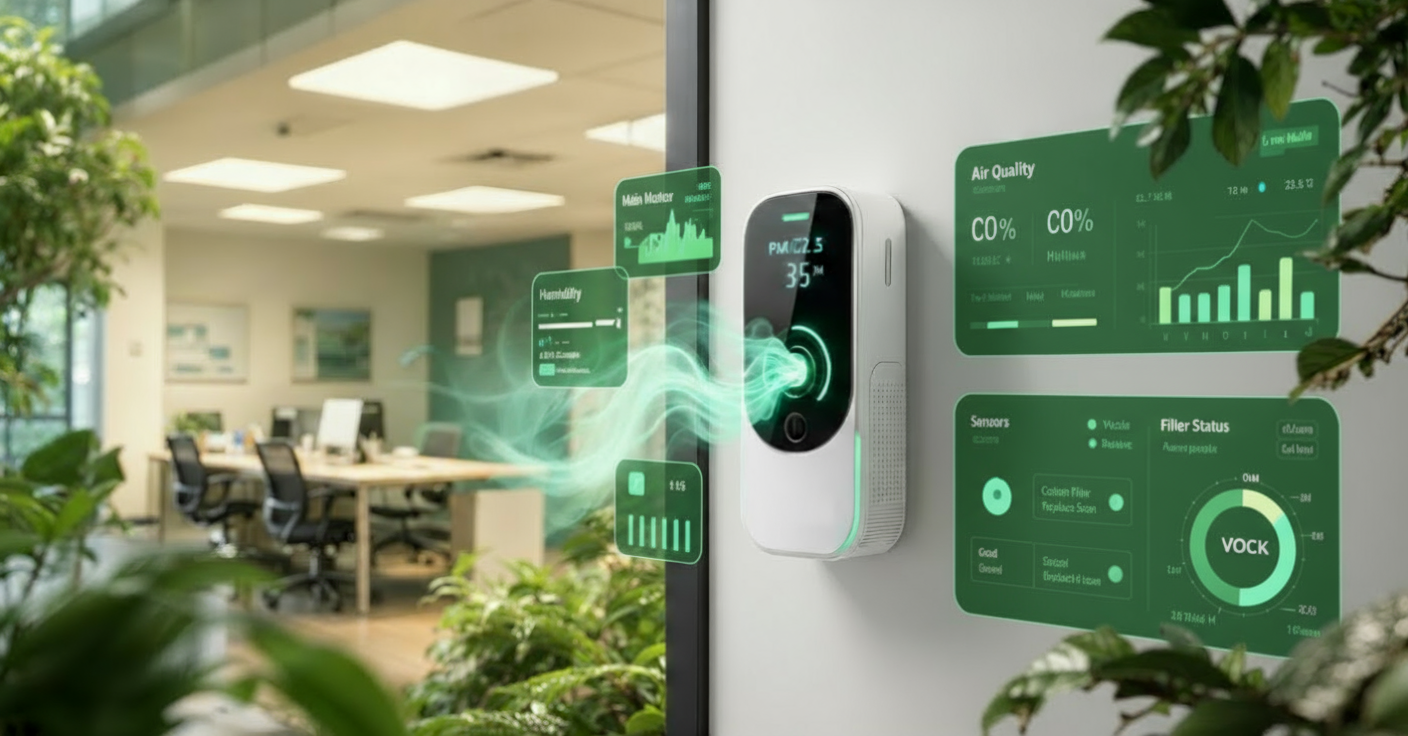
Why Indoor Air Quality is Important
ndoor air quality (IAQ) is essential because it directly affects the health, comfort, and well-being of people within enclosed spaces. Poor IAQ can lead to respiratory issues, allergies, and reduced cognitive performance. Factors such as pollutants, humidity, temperature, and CO2 levels can affect how individuals feel and function in environments like schools, healthcare facilities, offices, and homes. Monitoring and maintaining good indoor air quality ensures healthier, safer, and more productive spaces.
Advancements in IoT, AI, and sensor technologies have made it possible to continuously monitor and address indoor air quality challenges, thereby enhancing the overall environmental experience for both individuals and organizations.

Technical Specifications
SmartEco’s cutting-edge technology is designed for both reliability and ease of use, ensuring that users can deploy, operate, and scale their IAQ monitoring with minimal hassle.
Connectivity: Supports both wired and wireless data transmission using IoT and Big Data technologies for efficient data streaming and monitoring.
Device Compatibility: The system is compatible with modern web browsers (Chrome, Safari, Edge, Firefox) and offers mobile app support for iOS and Android devices, enabling full control and monitoring on the go.
High Accuracy Sensors: Equipped with high-precision sensors for accurate, real-time data collection of pollutants and environmental parameters.
Core Monitoring Parameters for SmartEco
SmartEco tracks a comprehensive set of air quality parameters, providing deep insights into the indoor environment’s status. The real-time monitoring of these key pollutants and environmental factors helps ensure that spaces remain safe, healthy, and conducive to well-being.
Air Quality Index (AQI)
A composite indicator that gives an overall view of indoor air quality.
Particulate Matter (PM 1, 2.5, 10)
Microscopic particles that can penetrate deep into the lungs, causing severe health issues.
Carbon Dioxide (CO₂)
High concentrations can lead to drowsiness, dizziness, and decreased cognitive performance.
Carbon Monoxide (CO):
A colorless, odorless gas that can be lethal in high concentrations.
Oxygen Levels (O₂)
Essential for human life; low oxygen can cause fatigue, confusion, and other serious health risks.
Volatile Organic Compounds (VOCs)
A group of chemicals that can cause eye, nose, and throat irritation, and long-term exposure may lead to more serious health issues.
Formaldehyde
Known carcinogen, exposure can cause respiratory irritation and other chronic health problems.
Sulphur Dioxide (SO₂)
A gas that can irritate the respiratory system, especially in sensitive individuals.
Nitrogen Dioxide (NO₂)
Contributes to air pollution and is harmful to respiratory health.
Humidity & Temperature
Imbalanced humidity and temperature levels can lead to discomfort and promote the growth of mold and bacteria.
Ozone (O₃)
High indoor ozone levels can exacerbate asthma and lead to other respiratory problems.
Noise Levels
Excessive noise can result in increased stress and negatively impact cognitive function.
SmartEco: Healthy Air for Schools, Hospitals, Offices, and Homes

Enhancing Student Performance and Health
Indoor air quality (IAQ) significantly impacts student health and performance, with poor IAQ leading to cognitive decline, increased absenteeism, and respiratory issues. SmartEco’s AI-driven monitoring systems optimize air quality in schools, using IoT technology to make real-time adjustments and ensure a healthier, more productive learning environment.

Ensuring Patient and Healthcare Worker Safety
In hospitals, optimal IAQ is essential for patient recovery and safety. Poor air quality increases infection risks and hinders healing. SmartEco’s AI-driven systems ensure clean air in critical areas like ICUs and operating rooms, improving patient outcomes and staff performance.

Enhancing Productivity and Employee Health
Poor IAQ in workplaces negatively impacts employee health, productivity, and morale, leading to symptoms like fatigue and respiratory issues. Maintaining optimal air quality is essential for enhancing employee well-being and organizational performance.

Elevating Family Health and Comfort
Indoor air quality in homes is crucial for family health and comfort. Pollutants such as dust, CO₂, and VOCs can trigger allergies, respiratory issues, and sleep disturbances, especially for children, the elderly, or individuals with pre-existing conditions. Proper IAQ management is key to ensuring long-term health.