

When you step into a room and instantly feel too warm, sticky, or uncomfortably dry, that feeling comes down to more than just temperature. It’s actually the balance between temperature and humidity that determines your indoor comfort.
Most people adjust the thermostat without realizing that humidity plays just as big a role in how we perceive air quality, energy efficiency, and overall wellbeing. Let’s explore why maintaining this balance is essential—and how a smart Indoor Air Quality Monitoring System can make it effortless.
The Science of Indoor Comfort:
Temperature: More Than Just Heat:
Temperature affects how your body exchanges heat with its surroundings. When it’s too high, your body struggles to cool down; when it’s too low, your muscles tense and blood circulation decreases. But there’s more—temperature also influences air movement, moisture retention, and the behavior of airborne particles like dust and VOCs (Volatile Organic Compounds).
A stable temperature not only keeps you comfortable but also reduces strain on your HVAC system, extending its lifespan and lowering energy use.
Humidity: The Invisible Influencer:
Humidity is the amount of water vapor in the air. It plays a key role in how we feel the temperature:
High humidity (>60%) makes air feel warmer and heavier, often causing discomfort and fostering mold and bacterial growth.
Low humidity (<30–40%) can dry out your skin, eyes, and respiratory system, leading to irritation and fatigue.
The ideal indoor range is between 40–60% relative humidity, paired with a temperature of 22–25°C (72–77°F). Within this zone, air feels fresh, your body functions optimally, and materials in your space remain protected:

What Happens When the Balance Is Off:
Ignoring temperature and humidity levels can silently impact comfort, health, and property.
Discomfort:
You may feel hot or cold even when the thermostat reads normal because humidity alters how your body senses temperature.
Health Concerns:
High humidity fosters mold and allergens; low humidity dries nasal passages and increases infection risk.
Energy Waste:
Your air conditioner or heater works harder to compensate, increasing your utility bills.
Structural Damage:
Moisture can warp wood, peel paint, and damage electronics; dry air can cause cracks in furniture and flooring
These issues often develop gradually—until one day, you notice a musty smell, condensation on windows, or higher energy usage.
The Role of Smart Indoor Air Quality Monitoring:
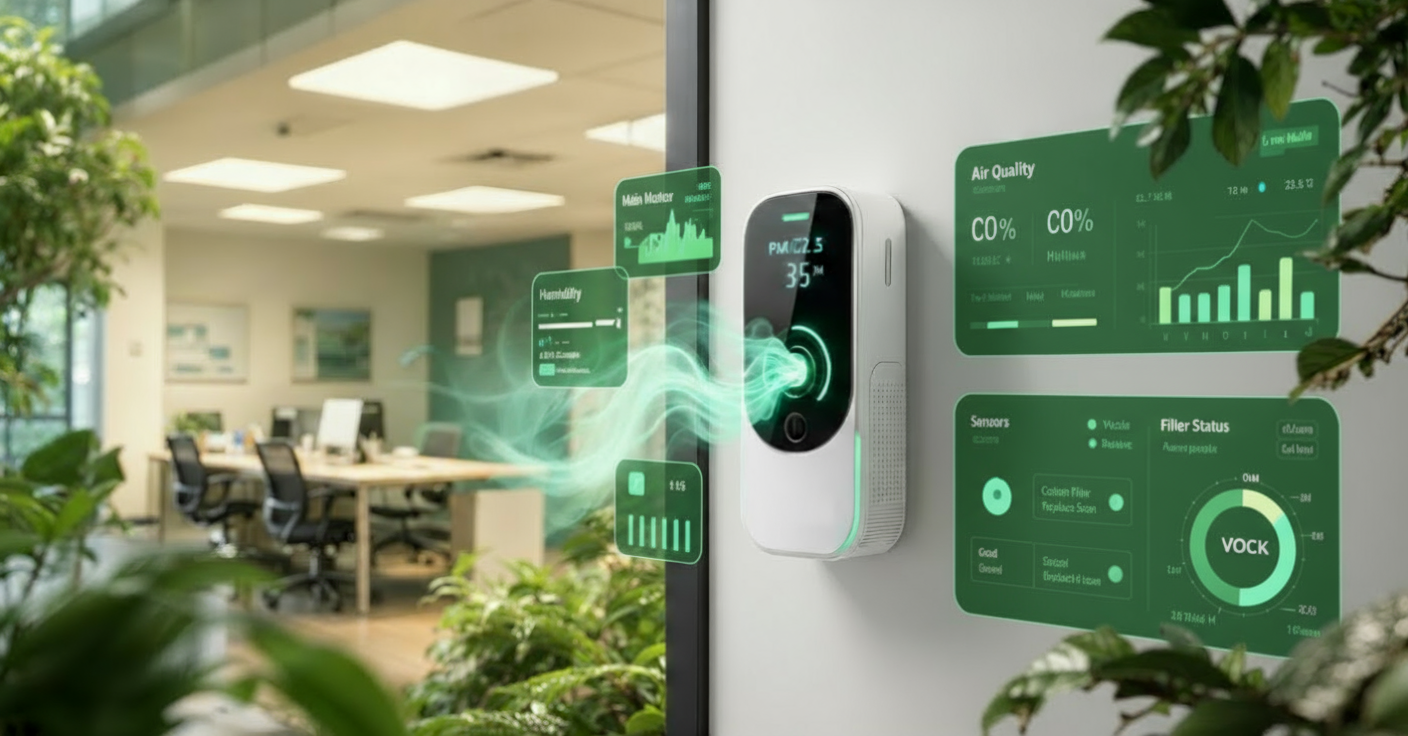
This is where technology steps in. A smart Indoor Air Quality (IAQ) Monitoring System helps you keep temperature and humidity within the ideal range automatically.
Real-Time Tracking:
Continuous monitoring gives you live data on temperature, humidity, CO₂, VOCs, and particulate matter (PM2.5). You can view everything through an intuitive dashboard or mobile app.
Alerts & Notifications:
Get instant alerts when humidity levels exceed comfort thresholds or temperature drops unexpectedly. Early warnings allow you to take quick corrective actions before problems arise.
Data Insights & Trends:
Historical data reveals long-term patterns—like rooms that always get damp after rain or areas that dry out during heating seasons. These insights help optimize your ventilation and HVAC schedules for consistent comfort.
Energy Optimization:
By maintaining precise temperature and humidity levels, your HVAC system doesn’t have to overwork. This improves energy efficiency, reduces costs, and extends system life.
Integration & Automation:
Smart IAQ systems can connect with HVAC units, humidifiers, or dehumidifiers to adjust conditions automatically—so you don’t have to lift a finger.
Why It Matters for Homes and Workspaces
Whether you’re managing an office, school, hospital, or home, indoor comfort directly affects health, productivity, and mood.
Offices
$199
In offices, poor air quality reduces focus, efficiency, and overall productivity.
Schools
$199
In schools, maintaining proper temperature and humidity supports student concentration, attendance, and overall wellbeing.
Homes
$199
In homes, improper humidity leads to discomfort, mold growth, and higher energy costs.
Healthcare
$199
In healthcare and laboratories, precise control prevents contamination and supports patient safety.
No matter where you live—whether in a dry, cold region or a warm, humid one—monitoring and controlling temperature and humidity ensures year-round comfort, health, and performance.

How SmartEco’s IAQ Monitoring System Helps:
At SmartEco, we believe that true comfort starts with clean, balanced air. Our Indoor Air Quality Monitoring System is designed to provide:
$199
☑ Accurate readings of temperature, humidity, CO₂, and particulate matter.
$199
☑ Energy-efficient automation that integrates seamlessly with HVAC systems.
$199
☑ Real-time alerts and cloud-based dashboards accessible from anywhere.
$199
☑ Data-driven insights to improve building health and occupant comfort.
Whether it’s a home, commercial space, or industrial environment, SmartEco helps you maintain ideal indoor conditions for better living and working
Conclusion:
Temperature and humidity might seem like small details, but together, they are the foundation of indoor comfort. When they fall out of balance, health, productivity, and energy efficiency all suffer.
By using a smart Indoor Air Quality Monitoring System, you can take control—monitor, analyze, and optimize your environment to ensure lasting comfort and wellbeing. Take Control of Your Indoor Air
Experience the difference of true comfort and healthier air.
Learn more about how SmartEco’s Indoor Air Quality Monitoring System can help you monitor, manage, and maintain perfect indoor conditions at smarteco.ai