
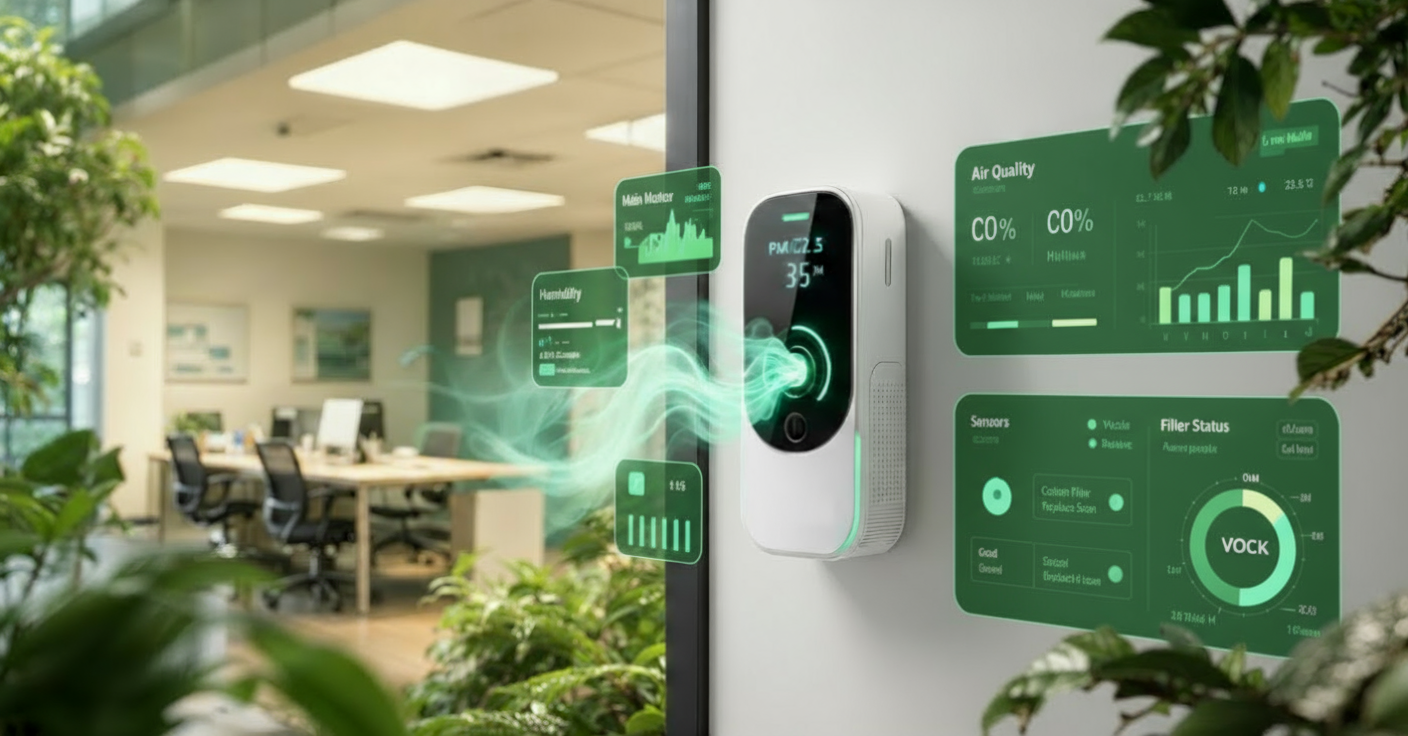
Indoor air quality (IAQ) is central to the WELL Building Standard (WELL), which sets rigorous benchmarks to ensure buildings promote the health, comfort, and well-being of their occupants. As organizations and building owners strive to meet these standards, SmartEco’s advanced air quality monitoring solutions are helping to streamline this process. By leveraging cutting-edge technology, SmartEco provides real-time, actionable insights into key air quality parameters, directly contributing to achieving WELL Certification.

Introduction: SmartEco and the Importance of IAQ
The WELL Building Standard focuses on various aspects of indoor environmental quality, and air quality is one of its key pillars. IAQ directly impacts the health, comfort, and cognitive performance of building occupants. From reducing sick days to improving productivity, ensuring clean air in schools, hospitals, and office spaces is crucial.
SmartEco, with its comprehensive air quality monitoring solutions, empowers building managers to efficiently meet WELL’s stringent requirements by providing real-time data on critical air quality parameters. Through continuous, automated monitoring, SmartEco ensures compliance and optimizes building environments for healthier indoor spaces.

How SmartEco Supports WELL Certification: Key Benefits:-
Continuous, Real-Time IAQ Monitoring
SmartEco’s continuous monitoring system offers real-time data on essential air quality parameters such as CO₂, PM2.5, PM10, volatile organic compounds (VOCs), formaldehyde, and more. This ensures that building owners are always aware of their IAQ status, providing the data needed to meet WELL Certification requirements efficiently. WELL certification demands consistent air quality performance, and with SmartEco’s real-time monitoring capabilities, facility managers can quickly identify any deviations in air quality and take necessary actions to maintain optimal conditions, ensuring ongoing compliance with the certification standards.
Cost-Effective Solution for Certification
Traditional methods of monitoring air quality often involve labor-intensive procedures and expensive air quality tests. SmartEco offers a more cost-effective alternative, delivering ongoing monitoring without the need for extensive testing, making it an excellent option for facilities looking to meet WELL standards without overspending.
Data-Driven Decision Making
SmartEco’s platform provides actionable insights through dashboards and reports that allow building managers to make informed decisions. With the ability to track air quality data over time, SmartEco facilitates proactive management of air pollutants, ensuring that parameters are consistently within the required thresholds for WELL Certification.
Seamless Integration into Building Management Systems
SmartEco’s device integration capabilities enable seamless compatibility with existing building management systems (BMS). This minimizes disruption to daily operations and simplifies the process of achieving and maintaining WELL Certification. The system’s flexibility ensures it can be customized to suit various facility types, from schools to healthcare institutions.

Key WELL Features Addressed by SmartEco:
Air Quality Monitoring
WELL requires continuous air quality monitoring for pollutants such as particulate matter (PM2.5, PM10), CO₂, and VOCs. SmartEco provides 24/7 monitoring of these parameters, ensuring that building owners can track and manage air quality in line with WELL standards.
Enhanced Air Quality
In addition to meeting basic air quality requirements, SmartEco helps facilities exceed these benchmarks by offering insights that promote air quality beyond compliance. This contributes to a building’s overall WELL score, potentially securing additional optimization points.
Humidification Control
Proper humidity control is crucial for maintaining indoor air quality and comfort. SmartEco’s sensors monitor humidity levels, ensuring they stay within the recommended range to support occupant health and comfort, as required by WELL Certification.
Thermal Comfort
WELL Certification emphasizes the importance of thermal comfort, which is closely linked to air quality. SmartEco integration with HVAC systems allows for the regulation of air temperature, humidity, and ventilation, ensuring a holistic approach to indoor environmental quality.
The Technological Edge: How SmartEco Uses Advanced AI and Analytics: –
SmartEco sets itself apart from traditional IAQ monitoring solutions by leveraging Artificial Intelligence (AI) and machine learning algorithms. These technologies enhance its ability to process vast amounts of air quality data, detect anomalies, and predict potential air quality issues before they become a concern.
Predictive Analytics
SmartEco’s AI-driven insights help predict air quality trends, offering preventive measures to maintain healthy air quality levels, even before regulatory limits are breached.
Automated Alerts
With real-time alerts, facility managers can respond immediately to suboptimal air quality, whether it’s due to elevated CO₂ levels or excessive particulate matter, ensuring that WELL standards are consistently met.
Customizable Reporting
SmartEco allows for flexible, customizable reports that are aligned with WELL’s documentation requirements, making the certification process smoother and more transparent.
Conclusion
Achieving WELL Certification with SmartEco
SmartEco is not just an air quality monitoring solution; it is a partner in helping organizations create healthier, more sustainable environments. By providing continuous, real-time air quality data, integrated seamlessly into building management systems, SmartEco supports facilities in achieving and maintaining WELL Certification. This commitment to high IAQ not only ensures certification but also enhances occupant health, improves productivity, and fosters a greater sense of well-being.