
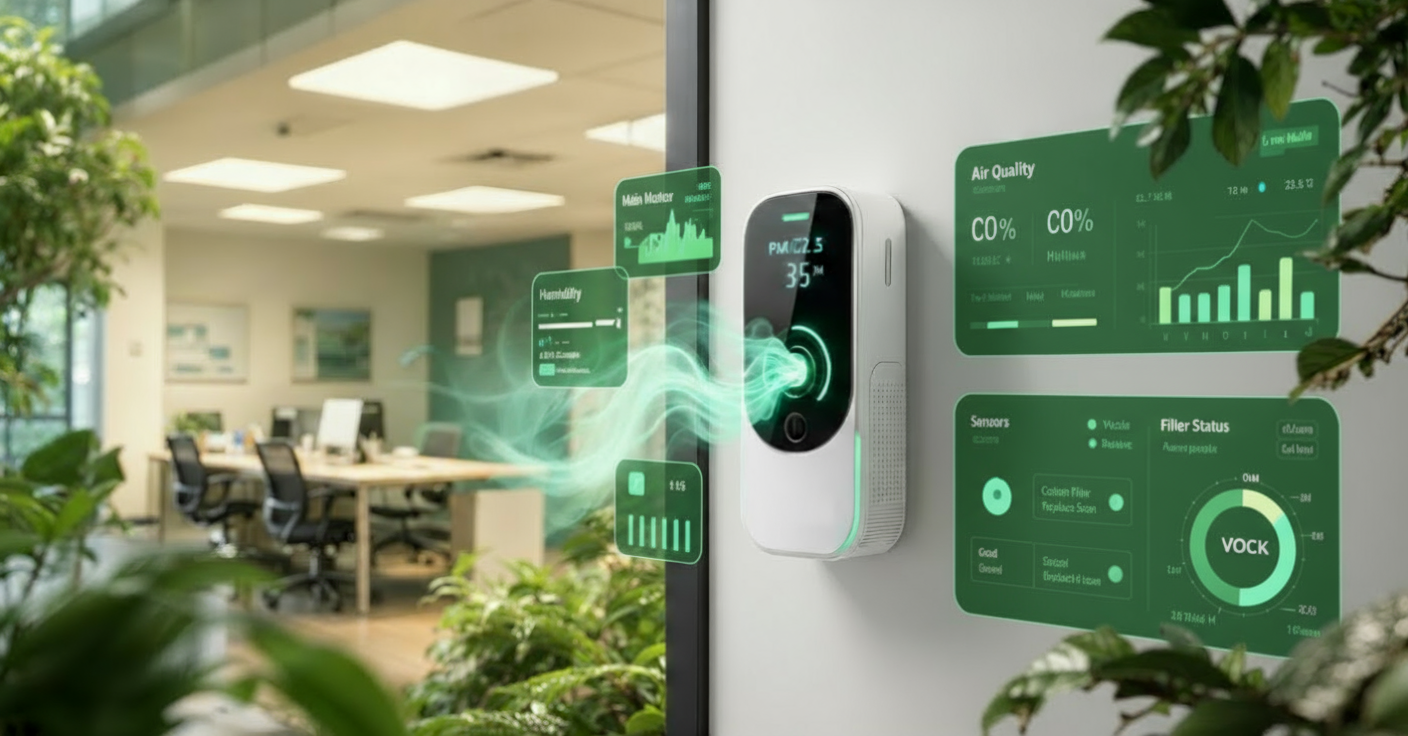

Indoor Air Quality (IAQ) is a critical, yet often underestimated, determinant of health, cognitive performance, and overall well-being in indoor spaces. In environments such as schools, hospitals, and offices—where people spend over 90% of their time—poor IAQ can have significant short-term and long-term impacts on human performance and health outcomes.
Understanding the Hidden Threats of Poor Indoor Air Quality
Despite being invisible, indoor air pollutants can drastically affect occupants’ functionality and health. Key consequences include:
Health Risks and Chronic Illnesses
Pollutants like carbon monoxide (CO), volatile organic compounds (VOCs), particulate matter (PM2.5 and PM10), and biological contaminants (e.g., mold, bacteria) can cause or exacerbate:
Allergies and asthma
Respiratory infections
Long-term exposure effects such as cancer and neurological disorders
Cognitive Performance Decline
Elevated CO₂ levels and low oxygen availability can impair:
Concentration and mental alertness
Decision-making abilities
Short- and long-term memory
Learning performance in students and task execution in professionals
Fatigue, Discomfort, and Reduced Motivation
Poor thermal regulation and high humidity levels contribute to:
Physical discomfort (e.g., sweating, chills)
Mental fatigue and drowsiness
Increased absenteeism and decreased workplace morale
Increased Risk of Illness Transmission
Inadequate air filtration systems allow viruses, bacteria, and allergens to circulate, leading to:
Frequent outbreaks of cold, flu, and airborne infections
Higher sick days among students and employees
Potential spread of serious diseases in healthcare settings

Smart Eco: Enhancing Air Quality for Healthier, More Productive Spaces
Smart Eco offers cutting-edge Indoor Air Quality Monitoring Systems tailored for high-occupancy environments like schools, healthcare centres, and corporate buildings. Here’s how it transforms indoor spaces:
Intelligent Pollutant Detection
Continuously monitors critical indoor pollutants including:
Carbon dioxide (CO₂)
VOCs
Fine and coarse particulate matter (PM2.5, PM10)
Temperature and humidity fluctuations
Real-Time Alerts and Actionable Insights
Instantly notifies stakeholders when air quality deteriorates.
Instantly notifies stakeholders when air quality deteriorates
Integration with Building Management Systems (BMS)
Facilitates seamless control over:
Ventilation and air circulation
Humidity and temperature settings
Energy-efficient climate control strategies
Promoting Healthier Indoor Ecosystems
Maintains a consistent balance of humidity, airflow, and temperature
Reduces allergens, airborne pathogens, and respiratory irritants
Fosters an environment conducive to learning, healing, and high performance
Conclusion:
Poor indoor air quality is more than just a nuisance—it is a silent productivity killer and health hazard. In today’s world, where employee wellness and student performance are pivotal, organizations cannot afford to overlook indoor air conditions.
Smart Eco empowers institutions with intelligent tools to monitor, analyse, and improve IAQ in real time—turning reactive responses into preventive strategies. Cleaner air means fewer sick days, sharper minds, and more vibrant, productive indoor communities.
