

Indoor air quality (IAQ) is a critical factor influencing health, comfort, and productivity. In recent years, Dubai has made tremendous strides in improving the indoor air quality standards across various types of buildings, especially schools, hospitals, and offices. The Dubai Government, through its rigorous regulations and initiatives, has been at the forefront of this transformation, ensuring that the city’s indoor environments are not only comfortable but also conducive to better health and well-being.
A Vision for Healthier Indoor Environments:
Dubai Government has recognized the importance of controlling and improving indoor air quality as a key part of their sustainability goals. In a region where climate conditions make outdoor air quality a challenge, focusing on creating healthier indoor environments is essential for the well-being of the population, particularly for vulnerable groups like children, ICU patients, and office workers. Dubai Government’s regulations aim to ensure buildings in the city meet high standards for air quality, emphasizing the need for continuous monitoring and real-time data. The efforts are aligned with the city’s broader goals of becoming a global leader in urban sustainability and enhancing the quality of life for its citizens.
The Role of Technology in Improving IAQ:
With the help of innovative technologies, such as air quality monitoring systems, Dubai Government is creating a more responsive approach to managing indoor air. These systems are designed to track real-time air quality data, allowing building managers and authorities to take immediate action when pollutant levels exceed safe thresholds.
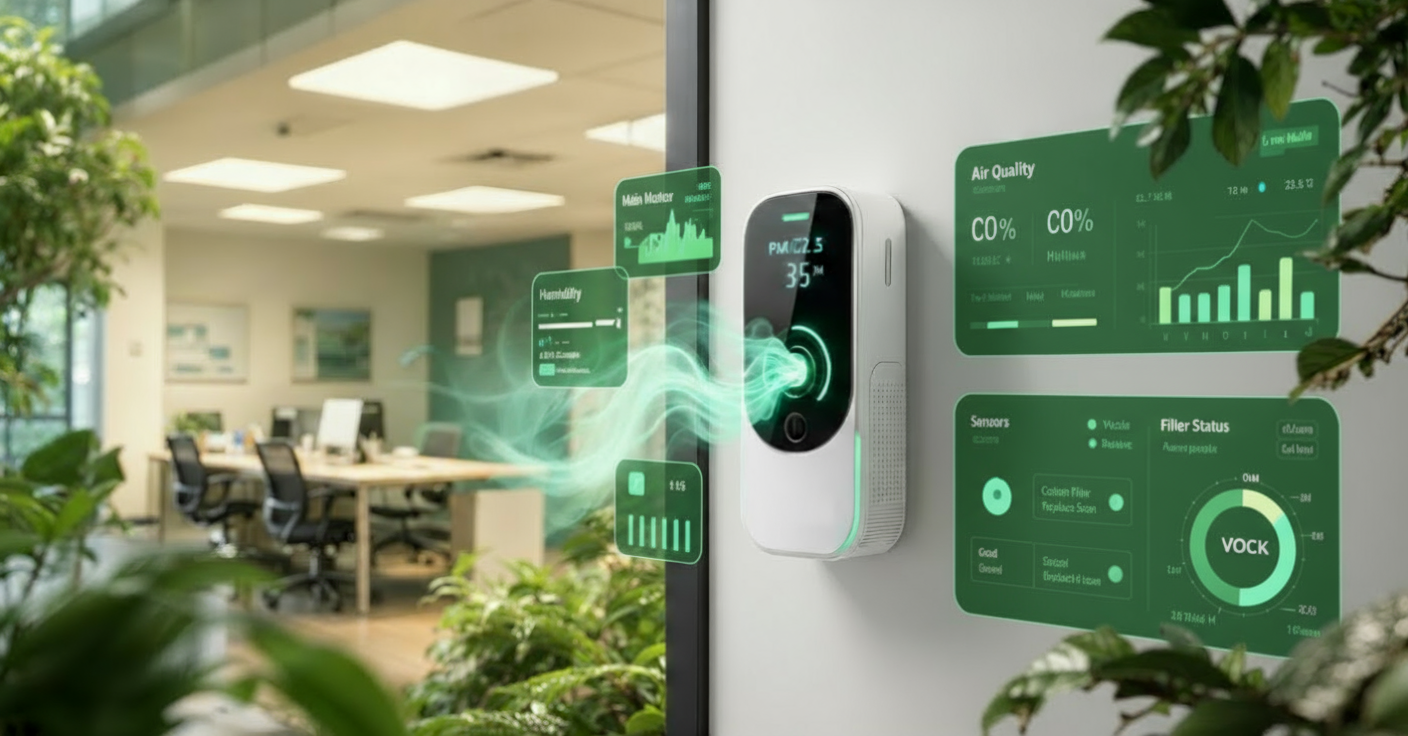
SmartEco, an advanced air quality monitoring solution, is a perfect fit for Dubai’s indoor air quality goals. Focused on improving air quality in schools, hospitals, and offices, SmartEco offers real-time monitoring of critical air quality parameters and provides actionable insights that help ensure the safety and comfort of building occupants.

SmartEco: The Solution for a Healthier Tomorrow:
SmartEco air quality monitoring system is designed to address the unique challenges faced by indoor environments in schools, hospitals, and offices. These environments require a level of air quality monitoring that goes beyond traditional systems, especially with the health risks posed by poor indoor air quality.
For schools
For schools, the well-being of children is paramount. Poor IAQ can affect students’ concentration, cause respiratory issues, and impact their overall health. SmartEco’s solutions ensure that air quality in classrooms is consistently monitored and optimized, reducing the risk of these health issues.
Hospitals
Hospitals, especially ICU units, require the most stringent air quality measures. Even slight deviations from optimal IAQ can compromise patient recovery and increase the risk of infections. SmartEco’s IAQ monitoring systems are tailor-made for hospitals, ensuring that the air in ICUs is consistently at safe levels, providing patients with the best possible environment for recovery.
Office buildings
In office buildings, air quality directly affects the productivity, comfort, and well-being of employees. Poor air quality can lead to sick building syndrome, causing headaches, fatigue, and respiratory problems. By deploying SmartEco’s solutions, office managers can ensure that their workspaces provide fresh, clean air, leading to improved employee performance and satisfaction.
Advantages and Features of SmartEco: The Next Generation of IAQ Monitoring:
The next generation of indoor air quality monitoring isn’t just about detecting pollutants; it’s about transforming how we interact with and understand air quality. Here are some key features and advantages of SmartEco’s advanced IAQ monitoring system:
Real-Time Monitoring & Alerts:
SmartEco provides continuous, real-time air quality monitoring, allowing users to detect potential issues before they escalate. If pollutant levels exceed the recommended thresholds, automatic alerts are triggered, enabling immediate corrective action.
Comprehensive Air Quality Parameters:
SmartEco tracks a wide range of parameters, including CO₂, PM1, PM2.5, PM10, VOCs, CO, O₃, NO₂, SO₂, Virus Index, Mold Index, AQI, and more. This comprehensive data helps building managers maintain a healthy environment across all sectors, from education to healthcare to corporate spaces.
Cloud-Based Analytics and Reporting:
The system uses cloud-based data analytics to generate detailed reports, allowing users to review historical trends and make data-driven decisions for better IAQ management. This feature is particularly useful for long-term monitoring and compliance with Dubai’s IAQ regulations.
User-Friendly Dashboard:
SmartEco’s intuitive dashboard provides an easy-to-understand view of air quality, with customizable options for different building sectors. This enables quick decision-making and efficient management of IAQ.
AI-Powered Predictions:
Leveraging the power of artificial intelligence, SmartEco predicts potential IAQ issues before they happen, offering proactive solutions and ensuring cleaner air before it becomes a concern.
Dubai’s IAQ Regulations: A Step Toward Healthier Buildings:
Dubai Government’s comprehensive regulations are not just about meeting basic air quality standards—they are about creating healthier environments for everyone. The government’s forward-thinking approach is setting a new benchmark for cities worldwide, driving the adoption of smart technologies like SmartEco’s air quality monitoring systems to ensure that buildings remain safe and healthy for their occupants.
By fostering the use of real-time data and continuous monitoring, Dubai Government is ensuring that IAQ is no longer an afterthought. Instead, it is a central component of building management, affecting everything from occupant health to productivity.
Looking Ahead: A Cleaner, Healthier Future:
As Dubai continues to advance in its sustainability and public health efforts, the role of IAQ in building design and management will only increase in importance. With the continued adoption of technologies like SmartEco, the city is paving the way for a future where clean air is not a luxury, but a standard. Whether it’s for schools, hospitals, or office buildings, the future of indoor air quality in Dubai is bright, thanks to smart technologies and regulatory efforts that prioritize health and well-being.
Conclusion:
Dubai Government’s initiatives to raise the bar for indoor air quality are transforming the city into a healthier, more sustainable urban environment. Through the integration of advanced monitoring systems like SmartEco, Dubai is setting the standard for IAQ across the globe. By focusing on schools, hospitals, and offices, SmartEco helps ensure that every building remains a safe haven for its occupants—creating a future where healthy air is a reality for all.